
Discover The Communication & Listening Habits Every Couple Needs
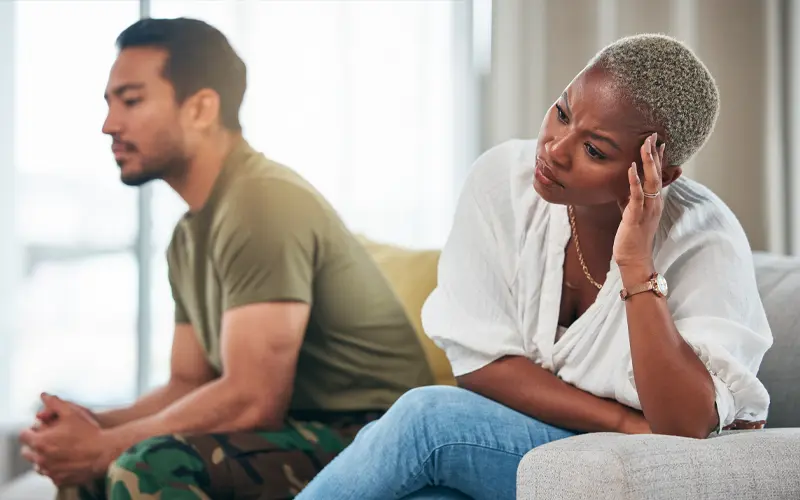
If there’s one thing we hear more than anything else from the couples we coach, it’s this: ‘We just can’t seem to communicate.’ Thankfully, we get it and understand it. After 30+ years of marriage, we’ve had our share of conversations that went sideways, moments where we talked past each other, and seasons where silence felt safer than honesty. But we’ve also learned that communication is a skill, and, like any skill, it can be developed to strengthen the bond in marriages.
The couples who communicate well didn’t just stumble into it; they learned to build effective talking and listening habits that work for them. We’re talking about intentional, consistent habits that promote safety, trust, and real connection over time.
So, let’s go deeper and explore the five key communication habits your marriage needs!
1. Listen to Understand, Not to Respond
Most of us think we’re listening when we’re actually just waiting for our turn to talk. In our mind, we’re already formulating our response before our partner has even finished speaking. Then we jump in and start rattling off our thoughts on the matter. And guess what? Your spouse is hearing words come out of your mouth, just as you were when they were talking; only, they aren’t truly listening to what you’re saying either! Like you, they’re just waiting for you to be quiet so they can respond again. And the frustrating cycle of talking and not listening continues!
True listening means setting your responses aside and giving your spouse your full attention to understand their feelings and/or needs. Listening also allows the opportunity to ask follow-up questions or repeat what was said to ensure understanding before responding or offering solutions.
Proverbs 18:13 puts it plainly: “To answer before listening—that is folly and shame.” In other words, it means you weren’t listening…Shame on you! Unfortunately, tuning out during conversations with your spouse is one of the most common communication mistakes in marriage.
Put Listening Into Practice
During your next disagreement, when your spouse is finished talking, try responding with something like, ‘What I hear you saying is, x-y-z…’ Reciting back what you’ve heard to your spouse means you were listening. Even if you’re interpretation was off, at least you’ve begun making an effort to LISTEN attentively.
Always recite what you believe you heard before you share your perspective on the matter. In doing so, your spouse can then extend the same listening courtesy to you when you’re talking. And eventually, both of you can learn to take turns, mutually listening to each other. You may be surprised at how making that one shift can change entire conversations and enhance communication.
2. Choose the Right Time for Hard Conversations
Timing isn’t everything in communication, but it is when you need to have a hard conversation. Jason and I call “hard” conversations “H.O.T. Conversations,” which means Honest, Open, and Transparent talks. The same conversation held at the right time versus the wrong time can produce completely different outcomes. So, understanding the time and environment for holding heavy talks is key.
Hard conversations don’t belong at the end of a long work day, in the middle of an argument about something else, or right before bed when both of you are depleted. They belong to a time when both of you feel calm, safe, attentive, and ready to engage, which requires agreement.
Put Hard-Conversation-Timing Into Practice
Before launching into something heavy, ask: ‘Is now a good time to talk about something important?’ That simple question gives your partner a choice rather than an ambush, and it sets the conversation up for success. If now isn’t a good time, be sure to schedule a mutual time when both of you are attentive, have privacy, and are ready to engage.
After 30+ years of marriage, we can tell you that the conversations we’ve approached with intention have almost always gone better than the ones we dove into impulsively. Moreover, it’s important not to avoid hard conversations. Doing that typically causes issues and emotions to fester. By the time you have the discussion, the outcome isn’t as favorable as you’d like.
3. Say What You Mean Without Weaponizing It
Honesty in marriage is non-negotiable. But there is a difference between honest communication and communication used as a weapon. Harsh words spoken in the heat of the moment can leave marks that take years to heal.
Ephesians 4:15 encourages us to ‘speak the truth in love,’ which means that both ‘truth’ and ‘love’ matter. For instance, truth without love is harsh, and love without truth is avoidance! However, the main communication goal here is to uphold both virtues simultaneously when you’re talking with one another.
What does this look like? I’m so happy you asked! Speaking the truth in love means learning to communicate in ‘I’ statements rather than using ‘you’ accusations that purposely offend. Instead of saying, ‘You never listen to me when I’m talking to you,’ try using, ‘I feel unheard when I share something important, and there’s no response.’ Same issue, completely different posture. One statement invites connection, while the other invites defense.
Putting Communication in Truth & Love Into Practice
Identify one thing you’ve been wanting to say but haven’t because you weren’t sure how to say it without it turning into a fight. Remember, ask your spouse if it’s a good time to talk first, and whenever it is, practice reframing your words using ‘I’ statements. Examples include: “I feel,” “I believe,” or “I have a question…”
You can also write out what you need to say and the feelings that come along with it beforehand if you need to. In doing so, this can help enhance communication and expression, enabling you to better connect with your spouse.
Could your marriage or relationship use a tune-up?
We can help!
Consider Marriage Coaching with Us!
4. When Communicating, Pursue Understanding Over Just Agreeing
One of the most freeing things you can realize in marriage is that you and your spouse don’t always have to agree on everything, understanding each other is far more important in the marriage.
The goal of most marital arguments isn’t actually to reach an agreement, but to feel understood. When a husband and wife both feel mutually respected, heard, and understood, even a disagreement can end in peace. Reaching understanding means learning to be curious about your spouse’s perspective rather than just defending your own. In most cases, when you and your spouse agree on something, mutual understanding is typically present in the conversation. However, when there is a disagreement, working to gain mutual understanding is required to maintain a connection.
Put Understanding Each Other’s Perspectives Into Practice
It really is okay to ‘agree to disagree.’ However, understanding each other and WHY you disagree trumps that. So, the next time a disagreement arises, you can put this into practice by first setting aside your feelings and perceptions so your conversation doesn’t turn into an argument. For example, instead of saying, “That’s crazy; how can you possibly see it that way?” try saying something like, ‘I hear you, but could you help me understand why this matters so much to you?’
Understanding in disagreement doesn’t mean surrendering your own view. It means honoring your spouse enough to try seeing things through their eyes or from their point of view.
5. Make “Daily Communication Connections” a Non-Negotiable
Communication doesn’t only have to happen in big, intentional conversations; it can happen in small, bite-sized moments of connection every day. Yet when those daily moments start to fade, couples often start feeling like strangers living in the same house.
Intentional daily check-ins don’t have to be long. Even ten minutes of real, device-free conversation at the end of the day can make a significant difference in your marriage. Countless studies have shown that connecting with your spouse daily can enhance overall emotional, mental, and physical health, as well as spiritual well-being. What we’re saying here is that keeping the lines of communication open every day is essential to building a strong, thriving marriage.
Put Connecting Through Daily Communication Into Practice
Daily communication in marriage is both tactical and practical, so you can do this if you truly want to! Start practicing simple things like asking each other how you’re really doing, what’s been on your mind lately, etc. You could even start sharing one significant thing that happened that day and how it impacted you.
So, what’s our favorite way to communicate daily? Praying together! We’ve put this and the daily communication connection into practice in our own marriage, and we’ve seen it make a huge difference! Having hard conversations has become easier because we’re not playing catch-up, and there’s a lot more genuine laughter, joy, and peace in our home because of it.
Marriage Coaching Can Help with Communication
Communication in marriage is not just a practical skill; it’s an act of love. During our marriage coaching sessions, we consistently learn that miscommunication is the top issue most couples experience. we teach that each time you choose to attentively listen, speak with true care, pursue mutual understanding, and stay in the conversation when it gets hard, you are choosing your spouse and rooting for your marriage to win!
As certified marriage coaches, we’ve seen countless instances where communication and conflict resolution are the top areas where most couples struggle, disconnect, and get stuck.
However, we help equip and encourage them in three ways, to:
-
- Understand what God’s Word says about communication and respect
- Learn how to work through and practice courtesy listening skills
- Connect daily through pillow talk and prayer
If you and your spouse are ready to build stronger communication habits, we’d love to help walk you through that and more! Your marriage matters to us, and we believe your love story is still being written. Click below to get started with a FREE consultation, and learn more about how our services could help you thrive!
Ready to strengthen your marriage? Your first conversation with Jason and Ros is free.
Book a Free Consult